
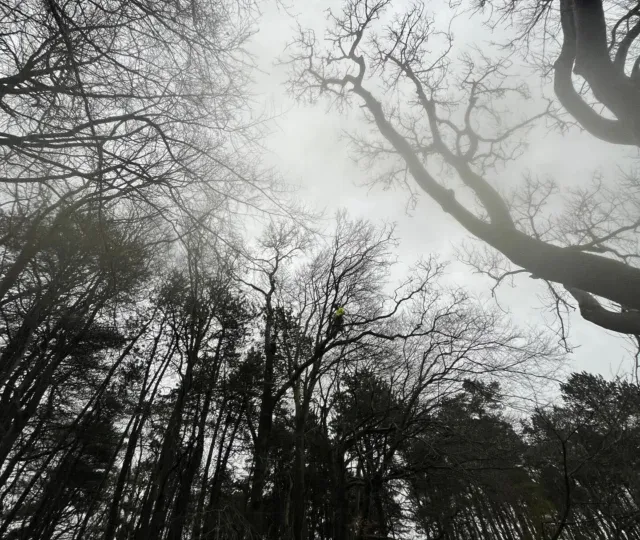
How pollarding works
The first pollard cut removes the crown back to a chosen height, leaving a framework of main limbs. The tree responds with a flush of new shoots, which are cut back again every few years. Over time the tree develops a stable pollard head and stays at a constant size.
Which trees suit pollarding?
Willow, lime and London plane are classic pollard species and respond well. Pollarding works best when it's started on a young or semi-mature tree and repeated regularly. Pollarding a large, old tree that has never been pollarded can do serious harm — in that case we'll recommend a different approach.
Roads, utilities and sightlines
Pollarding is widely used to keep trees clear of roads, buildings, lighting, utility lines and sightlines without removing them. Regular cycles keep each cut small, which is better for the tree than occasional heavy pruning.
Pollarding for habitat
Sometimes a tree is pollarded to make it safe while keeping its value to wildlife. We recently pollarded an ash showing bad signs of ash dieback — although it most likely won't recover, the standing timber will serve as good habitat.
What's included
- A free, no-obligation site visit and fixed written quote
- Checks for Tree Preservation Orders and conservation areas, with applications handled for you
- Work carried out by a fully insured, qualified crew to BS3998 standards
- All waste removed — or logs and chip left with you if you'd rather keep them
- The site left clean and tidy
Where we work
Based near Nailsea, we provide pollarding across Nailsea , Backwell , Clevedon , Portishead , Long Ashton , Yatton , Weston-super-Mare and the Bristol fringe .
Last updated 22 October 2026.